

International Scientific Conference on Business and Economics
"Future-Ready Economies: Innovation, Entrepreneurship, and Digital Competitiveness"
Conference Dates
11-12 June 2026
Venue
UNIVERSIDAD EUROPEA DE VALENCIA
Calle Guillem de Castro 175, 46008 Valencia
Paper Submission Deadline: April 30, 2026

A Forum for Scholars, Policymakers & Practitioners
We are delighted to invite you to the 9th International Scientific Conference on Business and Economics (ISCBE 2026), to be held on 11-12 June 2026, in Valencia, at the Universidad Europea de Valencia, Valencia, Spain.
“FUTURE-READY ECONOMIES: INNOVATION, ENTREPRENEURSHIP, AND DIGITAL COMPETITIVENESS”
This conference provides a forward-looking and interdisciplinary platform for scholars, policymakers, and practitioners to explore how economies can become resilient, competitive, and future-ready in an era of rapid technological change and global uncertainty. The central theme focuses on the critical role of innovation, entrepreneurship, and digital transformation in shaping sustainable and competitive economic systems.
Key discussions will address topics such as digital competitiveness and economic growth, innovation-driven entrepreneurship, the role of artificial intelligence and data-driven decision-making, startup and ecosystem development, digital skills and human capital, and policy frameworks supporting future-oriented economies. Special attention will be given to how firms, institutions, and regions can adapt to disruptive technologies while fostering inclusive and sustainable development.
We strongly encourage the active participation of master's and PhD students. The conference offers an excellent opportunity for early-career researchers to present their work, receive constructive feedback, and engage in meaningful dialogue with experienced academics and professionals, contributing to debates that will shape the future of business, economics, and digital transformation.
The joint organization of this conference results from collaboration within the ChallengeEU Alliance, co-funded by the European Union, and provides an opportunity to further strengthen cooperation among the organizers and other alliance partners.
We look forward to your valuable contributions and to welcoming you for stimulating discussions in Valencia in June 2026.
The Microsoft CMT service was used for managing the peer-reviewing process for this conference. This service was provided for free by Microsoft and they bore all expenses, including costs for Azure cloud services as well as for software development and support.
The conference is a Hybrid Event — attend in person in Valencia or participate online via Google Meet/Zoom.
Key Discussion Topics
Digital Competitiveness & Economic Growth
Innovation-Driven Entrepreneurship
Artificial Intelligence & Data-Driven Decision-Making
Startup & Ecosystem Development
Digital Skills & Human Capital
Policy Frameworks for Future-Oriented Economies
9th
Edition
6
Conference Tracks
Scopus
Indexed

Distinguished Voices in Business & Economics

Marco Valeri
Associate Professor of Organizational Behavior
Niccolò Cusano University, Italy
Marco Valeri is Associate Professor of Organizational Behavior at Niccolò Cusano University (Italy) and holds a PhD in Strategic Management and Organizational Behavior from the University of Rome “Tor Vergata.” He also teaches at Xenophon College (UK) and holds visiting, adjunct, and honorary professorships at several international institutions in Europe and Asia, including universities in North Macedonia, Malaysia, India, France, Hungary, Slovakia, and Poland. His teaching and consultancy activities focus on strategic management, leadership development, cross-cultural management, and international hospitality management. His research interests include sustainability and green practices, strategy implementation, knowledge management, family business, crisis management, information technology, and network analysis. He has extensive experience supervising doctoral and master’s theses and has held multiple international visiting appointments. Professor Valeri is listed in Stanford University’s 2024 ranking of the World’s Top 2% Scientists. He serves as Editor-in-Chief and Associate Editor of several international journals in management, leadership, and tourism and is a member of numerous editorial boards. In 2021, he received the Emerald Literati Award for Outstanding Reviewer.
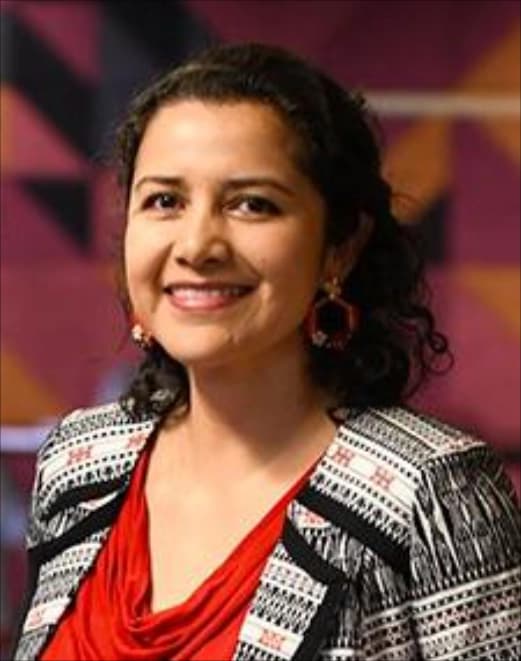
Catalina Franco
Researcher, Center for Applied Research (SNF)
NHH Norwegian School of Economics
Catalina Francois a researcher at the Center for Applied Research (SNF) at NHH Norwegian School of Economics. She is affiliated with the Centre for Experimental Research on Fairness, Inequality and Rationality (FAIR) and the Development Learning Lab (DLL). She completed her PhD at the University of Michigan. Her research focuses on education challenges in both industrialized and developing countries, often using a behavioral economics approach. She works with administrative data and also designs her own randomized studies. Currently, her research centers on the implications of generative AI for education, as well as the role of stress in gender differences in performance on high-stakes exams.
Six Thematic Areas
All papers discussing other challenging issues related to the general topic of the conference will be considered as well.
TRACK 01
Sustainability and Circular Economy
- Circular economy and energy crisis
- Green economy and finance
- Resource efficiency
- Sharing economy
- Environmental policy and management
- Sustainable tourism practices
- Community gardens and urban farming
- Clean energy access for underserved communities
- Other related topics
TRACK 02
Economics and Finance
- Behavioral finance
- Financial auditing
- Financial reporting
- Investment banking
- Macroeconomic stability
- Challenges of monetary economics
- Fiscal consolidation and effective public sector
- Knowledge economy
- Migration and labor markets
- Other related topics
TRACK 03
Entrepreneurship, Innovation, and Family Business
- Entrepreneurship theory development
- Entrepreneurial marketing
- Entrepreneurial finance
- Entrepreneurial education
- Women entrepreneurship
- Creativity and innovation
- Open innovation
- Knowledge spillover
- Green entrepreneurship
- Family business issues
- Other related topics
TRACK 04
Management and Marketing
- Management and leadership
- Operations management, business logistics and supply chain
- Corporate governance and corporate communications
- Human resource management and organizational behavior
- Competition in specific/different market(s)
- Human resources and tourism labor market challenges
- Societal marketing
- Customer relationship marketing
- Social media and digital marketing
- Other related topics
TRACK 05
Information and Computer Systems, Data Science, and Artificial Intelligence
- Computer architectures & embedded systems
- Real-time & distributed computing
- Cloud computing & IoT
- Software engineering & programming
- Networks & cybersecurity
- Graphics, games & HCI
- E-learning & intelligent interfaces
- Databases & data mining
- NLP & knowledge representation
- Data fusion & streaming
- Visualization & social analytics
- Robotics & optimization
- AI & active learning
- Other related topics
TRACK 06
Legal Aspects and Future-Ready Economies
- Legal frameworks for innovation and digital economies
- Competition law and antitrust in digital markets
- Intellectual property rights in innovation and Digital Entrepreneurship
- Regulation of digital platforms, e-commerce, and gig economy
- FinTech, Blockchain, and Legal Challenges of Digital Finance
- Cybersecurity law and digital resilience of Firms and Institutions
- Regulatory sandboxes and adaptive governance for Emerging Technologies
- Other related topics
Paths to Publication
Springer ISCBE Proceedings Book
No Publication FeeQualified papers, after the peer review process, will be published in the Springer ISCBE Proceedings Book in both print and electronic formats, with assignment of an ISBN. This Springer proceedings series is indexed in Scopus.
Full paper of 4,000–6,000 words required for inclusion in proceedings.
Sponsored Journals
All indexed in Scopus & ESCI Clarivate Analytics
Papers submitted to journals undergo the review process according to each journal's policies.
For PhD & Master's Students
For all Ph.D. and master's students who will participate in the conference, without any additional fee, special issues will be organized and published by:
SEEU Review
The Journal of South East European University
Green Economics
Jomard Publishing
JOINETECH
Revistas Utamed
The conference strongly encourages participation of early-career researchers. Excellent opportunity to present work, receive feedback, and engage with experienced academics and professionals.
Submission Timeline & Guidelines
Key Dates
April 30, 2026
Full-paper submission deadline
May 10, 2026
Notification of acceptance of papers
May 31, 2026
Camera-ready (print version paper) submission deadline
June 11-12, 2026
Conference
Submission Policy
A unique author registration is required for each paper or extended abstract accepted for presentation and publication. An individual may be an author or co-author of up to three papers. If a person is an author or co-author of more than one accepted paper, each paper must have at least one uniquely registered author in order to be included in the conference program and published. In cases where multiple papers or extended abstracts are submitted and accepted under the same single author, a separate registration fee must be paid for each accepted submission to be scheduled for presentation and publication.
Authors who intend to further develop their work after the conference for submission to scientific journals (and not for inclusion in the Springer proceedings) may submit an extended abstract only. Authors seeking publication in the Springer proceedings are required to submit a full paper.
Review Policy & PROCEEDINGS
Submitted papers are first evaluated through a double-blind peer-review process, which minimizes potential bias related to author identity or institutional affiliation, including name recognition, country, and gender. Papers are assessed according to their originality, methodological rigor, significance of findings, and clarity of presentation.
Based on the review outcomes, full-length papers that receive a positive evaluation may be accepted for inclusion in the conference proceedings. These proceedings will be published by Springer in both print and electronic formats and will meet all standards of an academic publication, including the assignment of an ISBN, thereby qualifying as fully refereed conference publications. Inclusion in the Springer proceedings is subject to final approval by subject matter experts and the editorial team.
For papers submitted for publication in sponsored journals, the double-blind peer-review process is conducted independently by the respective journals, and the final publication decision rests with the journal editors and reviewers.
Author Guidelines
Full paper: 4,000-6,000 words (for Springer proceedings)
Extended abstract: up to 2,000 words (for journal-only submissions)
Format: Times New Roman, 12pt, single-spaced
Title page must include affiliation(s), email address(es), and a short bio (up to 100 words)
Title page and manuscript must be submitted as a single file
Authors are invited to submit their manuscripts for the International Scientific Conference on Business and Economics (ISCBE 2026) using the Microsoft CMT submission system:
https://cmt3.research.microsoft.com/ISCBE2026Online Participation
For all participants who are unable to attend the conference in person, there will be an option for online participation. The conference link (Google Meet/ZOOM) will be sent to authors in advance.
Meet the Editors & Networking
"Meet the Editors" event will provide participants with insights into the publishing process, journal expectations, and best practices for academic publishing. "Project Networking" will serve as a platform for researchers and professionals to connect, explore collaboration opportunities, and discuss potential project partnerships.
Conference Fees
| Category | Early-Bird (until April 30, 2026) | Standard (until June 10, 2026) |
|---|---|---|
| Participants | €250 | €300 |
| Students | €180 | €250 |
| Accompanying Co-Author | €100 | €150 |
| Additional Paper | €100 | €150 |
| Attendees Without Papers | €50 | €50 |
Payment Details
Registration Includes
All fees cover the following
Conference materials upon registration confirmation
Certificate of participation
Conference e-proceedings
Coffee breaks and cocktail
Gala dinner
Contact
iscbe@seeu.edu.mkConference Leadership
Organizing Committee
Chairperson
Veland Ramadani
Chairperson
Blerta Abazi Caushi
Chairperson
Lina Maria Restrepo Plaza
Conference Secretary
Hyrije Abazi-Alili
Conference Secretary
Enrique Fatas Juberias
Conference Secretary
Gadaf Rexhepi
Administration
Driton Asani
Administration
Albinota Nuredini
Program Committee
Agron Caushi
South East European University, North Macedonia
Enrique Fatas Juberias
Universidad Europea de Valencia, Spain
Fitim Deari
South East European University, North Macedonia
Jeton Mazllami
South East European University, North Macedonia
Jusuf Zekiri
South East European University, North Macedonia
Lina Maria Restrepo Plaza
Universidad Europea de Valencia, Spain
Sadri Alija
South East European University, North Macedonia
Selajdin Abduli
South East European University, Macedonia
Shenaj Haxhimustafa
South East European University, North Macedonia
Shpresa Alija
South East European University, North Macedonia
Teuta Veseli-Kurtishi
South East European University, North Macedonia
Best Paper Award Committee
Lina Maria Restrepo Plaza
Universidad Europea de Valencia, Spain
Veland Ramadani
South East European University, North Macedonia
Gadaf Rexhepi
South East European University, North Macedonia
Scientific Committee
Abdylmenaf Bexheti
Macedonian Academy of Science and Arts, SEEU, North Macedonia
Andrea Caputo
University of Trento, Italy & University of Lincoln, UK
Besnik A. Krasniqi
Academy of Arts and Science of Kosovo & University of Prishtina, Kosovo
Brunilda Kosta
University of Tirana, Albania
Cristina Fernandes
University of Porto, Portugal
Carla Marques
CETRAD & Universidade De Trás-Os-Montes E Alto Douro, Portugal
Daphne Halkias
Cornell University, New York, USA
Dianne H.B. Welsh
University of North Carolina at Greensboro, USA
Esmeralda Shehaj
University of Tirana, Albania
Ewald Mittelstädt
South Westphalia University of Applied Sciences, Germany
Fatmir Besimi
South East European University, Republic of North Macedonia
Frank Hoy
Worcester Polytechnic Institute, USA
Gadaf Rexhepi
South East European University, Republic of North Macedonia
Gheorghita Dinca
Transilvania University of Brasov, Romania
Givi Bedianashvili
Academy of Economic Sciences of Georgia, European University, Georgia
Grisna Anggadwita
Telkom University, Indonesia
Heinz-Dieter Wenzel
Bamberg University, Germany
Hussain G. Rammal
University of Adelaide, Australia
Hyrije Abazi-Alili
South East European University, Republic of North Macedonia
Iraj Hashi
Business School Staffordshire University, United Kingdom
Jeton Mazllami
South East European University, Republic of North Macedonia
Jiří Strouhal
Skoda Auto University, Czech Republic
Justina Shiroka-Pula
Academy of Arts and Science of Kosovo, Kosovo
Jusuf Zeqiri
South East European University, Republic of North Macedonia
Khaula Alkaabi
United Arab Emirates University, UAE
Laura Tampieri
Bologna University, Italy
Leo-Paul Dana
LUT University, Finland
Lilia Grigoroi
Academy of Economic Studies of Moldova, Republic of Moldova
Magdalena Mikołajek-Gocejna
SGH Warsaw School of Economics, Poland
Mara Teresa da Silva Madaleno
University of Aveiro, Portugal
Nikola Milović
University of Montenegro, Montenegro
Olga Domakur
Belarusian State Academy of Telecommunications, Belarus
Paul Sergius Koku
Florida Atlantic University, USA
Ramo Palalić
Sultan Qaboos University, Oman
Rodica Crudu
Academy of Economic Studies of Moldova, Republic of Moldova
Sadudin Ibraimi
South East European University, Republic of North Macedonia
Srdjan Redzepagic
University Nice Sophia Antipolis, France
Shahamak Rezaei
Roskilde University, Denmark
Shpresa Syla
South East European University, Republic of North Macedonia
Shqipe Gërguri-Rashiti
American University of Middle East, Kuwait
Tea Munjishvili
Ivane Javakhishvili Tbilisi State University, Georgia
Teoman Duman
Epoka University, Albania
Tetiana Paientko
Kyiv National Economic University named after Vadym Hetman, Ukraine
Tonin Kola
University of Tirana, Albania
Veland Ramadani
South East European University, Republic of North Macedonia